Beyond the Prompt: How Modern Leaders Master UI/UX by Doing (with AI)
Career growth
AI hasn’t replaced the designer; it has replaced the "pixel-pusher."
Today, tools like Claude can generate a landing page in seconds, but they can’t explain why a user is dropping off your checkout page. Whether you’re a startup founder, a marketing lead, or a copywriter, learning the fundamentals of UI/UX isn’t about switching careers anymore. It’s about becoming a "Hybrid Professional"—a leader who knows how to direct AI to build high-converting, profitable products rather than just "pretty" ones.
The Golden Rule: Don’t Outsource Your Thinking
The biggest mistake leaders make is using AI to replace their work. To truly lead, you must use AI to accelerate your feedback loop. In my 10 years of designing for fintech and advertising, I’ve seen that the most successful projects aren’t the ones with the flashiest visuals—they’re the ones where the lead understands the "why" behind every button.
1. The "Reverse Prompt" Method
Instead of asking AI to "make a dashboard," find a high-quality design on Mobbin or Dribbble. Upload it to Claude and ask:
"Analyze the UX laws used here. Why is this layout effective for a high-stakes Fintech user?" This forces you to see the invisible logic behind the pixels.
2. The AI Peer-Review
Build a rough wireframe in Figma, take a screenshot, and ask a tool like UX Pilot:
"Act as a Senior UX Auditor. Find 3 friction points in this flow that would lower conversion for a first-time user." You learn by seeing your own mistakes through a professional lens in real-time.
The "Hybrid" Curriculum — What Topics Actually Matter?
For a busy leader, trying to learn everything is a trap. You need "High-Leverage UX"—the 20% of design knowledge that drives 80% of business results.
User Psychology & Conversion (The Marketer’s Edge): Master Hick’s Law (reducing choices) and Fitts’s Law (optimizing target areas). This is the difference between a landing page that looks nice and one that actually sells.
Information Architecture for SaaS (The Founder’s Edge): Learn to organize complex data. If you can map a clean dashboard structure, you save thousands in developer "re-work" costs.
UX Writing & Microcopy (The Copywriter’s Edge): Learn how the tone of a "Success Message" or a "Loading State" builds user trust.
Design-to-Dev Handoff: Understanding how "Auto-Layout" in Figma translates to "Flexbox" in code makes you the favorite person of every developer on your team.
The 30-Day "Action Over Theory" Plan
This isn't a "watch 100 hours of video" plan. It’s a production schedule designed for the modern leader.
Week 1: The Anatomy of Great Design. Deconstruct 5 famous apps using AI.
Identify their "Design System" (colors, typography, and spacing hierarchies).
Week 2: The "Prompt-to-Prototype" Sprint. Use Galileo AI or Uizard to generate a 3-page MVP. Move those into Figma and try to "break" the layout to see where the logic fails.
Week 3: Solving for Friction. Identify an app you hate using. Use Claude Artifacts to build a functional prototype of how you would fix one specific flow (like a "Cancel Subscription" screen).
Week 4: The Asset Launch. Package your Week 3 project into a Figma Template. Post it on the Figma Community or Gumroad. Your first $1 earned is your final exam.
High-Value Template Niches for 2026
Target Audience | High-Value Template Idea | Why it’s Profitable |
|---|---|---|
Founders | MVP "Vibe" Kits | Helps leaders map an app in 15 mins to show vision to investors. |
Fintech | Compliance-Ready Dashboards | Saves months of design time by providing KYC and transaction grids. |
Marketers | A/B Test Variant Kits | 20+ layout variations for one product to speed up conversion testing. |
SaaS Owners | Retention-Focused Onboarding | Solves the "First 60 Seconds" pain point for new users. |
💡 Senior Pro-Tip:
AI gives you the 'what,' but as someone who has navigated 10 years of design shifts, I can tell you: the 'why' is where the money is. Don't just accept the AI's first layout—challenge it. Does that button placement actually help the user, or is it just filling space?"
Are you ready for your first "Learning by Doing" sprint?
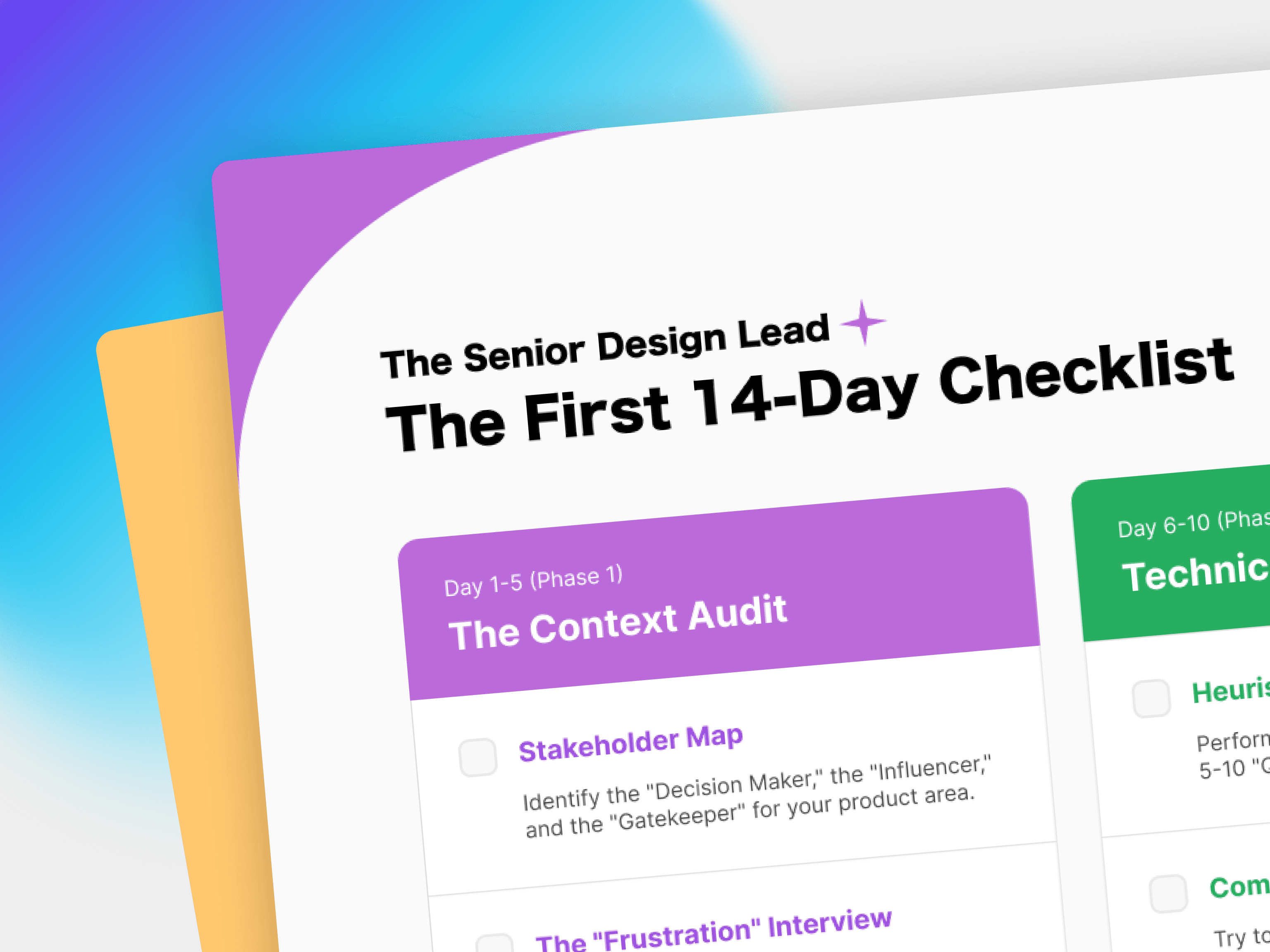
The difference between a "prompt engineer" and a Design-Led Leader is the ability to ship. Use this checklist to move from a blank Figma canvas to a sellable digital asset in 7 days.
<Your First Template Launch Checklist>
☑️ 1. Identify a "Micro-Pain": Build a specific "SaaS Pricing Table," not a whole site.
☑️ 2. Prompt the Logic: Use Claude to define the user journey first.
☑️ 3. Generate & Refine: Use Galileo for visuals, then polish the spacing in Figma.
☑️ 4. The "Human" Test: Ask a colleague to navigate your static layout. If they get stuck, fix it.
☑️ 5. Upload & Earn: Get your work on the Figma Community.
Mastering Senior-Level Impact:
Mastering AI tools makes you faster, but being a 'Senior' is about the invisible impact you have on the product roadmap. Learn how to translate that AI-driven efficiency into actual business value in How to Add Value in Your First 14 Days.